Most of what lives in Alaria is just an animal. A traveler walking the trade roads between settled lands will meet deer and wolves and crows, the same as anywhere, and will mostly worry about weather and bandits. The wild here is not uniformly monstrous. But the world was flooded with raw spirit and emotion twelve million years ago, in the event the cosmology calls the Ezz Rift, and that flood never fully drained. It pooled in the deep places. It soaked into the corpses of dead titans and the runoff of broken planes. And where it pooled, the line between a beast and a monster stopped being clean.
That line is the first thing to understand about Alarian fauna, because it is a gradient, not a wall. At one end sit the plain animals, the beastmen's distant kin and Gaea's minor animal-children, which breed and age and die like livestock. A step up from them are creatures that are merely too large or too strange to be safe: the desert mammoths of the southern wastes, the underbears that tunnel beneath the mountains on a sense of smell that can track a man through solid rock. These are dangerous the way a flood is dangerous. They have no malice. They are simply bigger than you and built for a country you are passing through.
The Frostwatch teaches a recruit one rule before any weapon: a beast you can predict. It hunts when it is hungry, sleeps when it is full, and runs when it is hurt. The thing that has come down out of the deep cold does none of these. That is how you know it is no longer a beast. — instruction recorded at Azanfrain
Further along the gradient, the strangeness stops being a quirk of size and starts being a property of the thing itself. Ice wyrms swim through glacier ice as easily as a fish swims through water, leaving tunnels that refreeze behind them, and no scholar has explained how. They are not dragons and not especially intelligent, but their bodies break the ordinary rules, and that is the signature of the middle of the gradient: a creature whose anatomy carries a little of the supernatural without any apparent will directing it. The Darklings of Lethos hold a deeper version of the same gift. Their skin drinks light, and the darkness they command cannot be pierced by any flame, only weakly by magical light. For them it is not a curse or a haunting. It is simply what they are, woven into them as surely as a wolf's teeth.
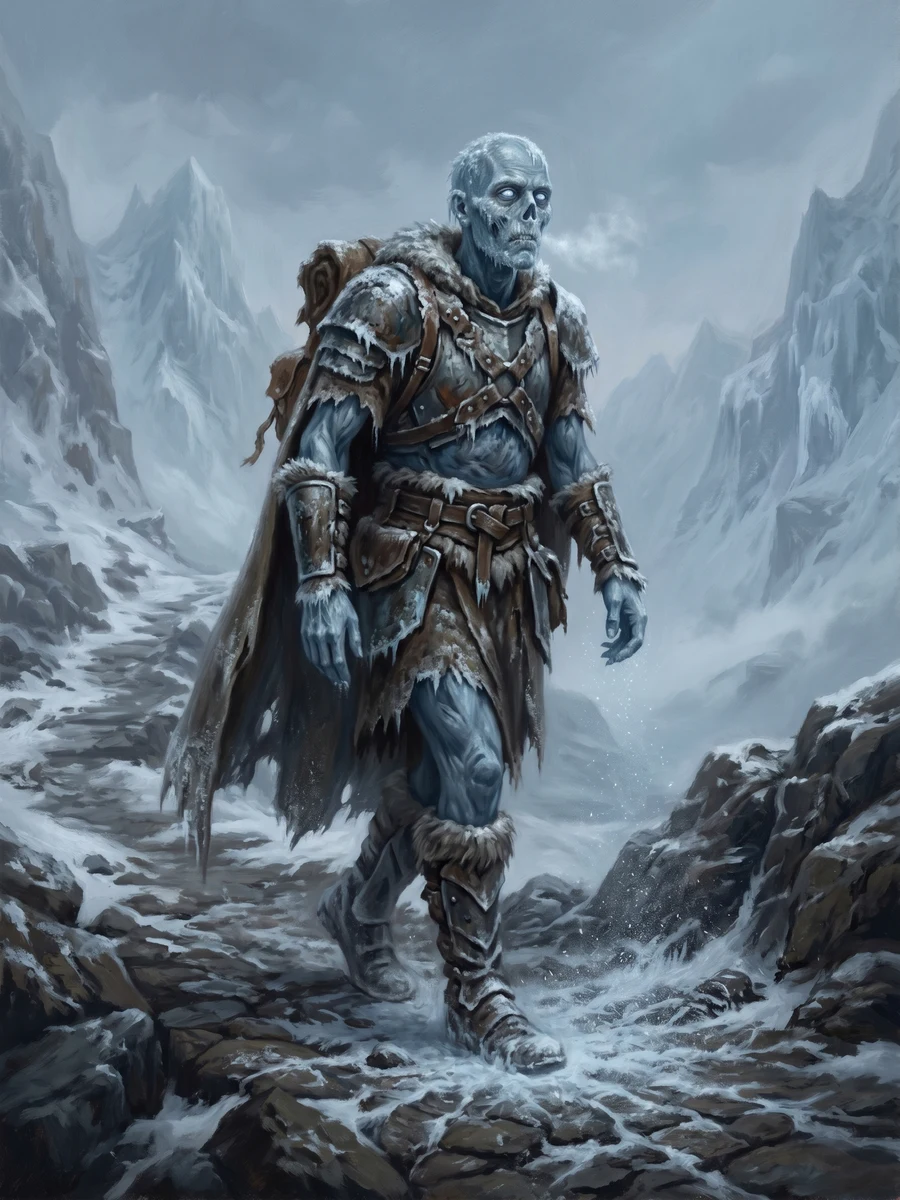
At the far end are the true monsters, and what marks them is that they have a will and an origin. They came from somewhere, and they want something. The undead are the cleanest example, because their existence is a piece of cosmological bookkeeping gone wrong: a strand of a death held back from the road it should have taken, knotted to a body that then moves again. The deeper horrors are older and worse. The Cold That Hungers, the thing the Fengruk believe killed the titan Vorukar, is not a creature that makes cold but cold itself given appetite, and the frostwalkers that march north out of the Pale Peaks every deep winter may be nothing more than its hunger wearing stolen corpses. A traveler can survive a beast by reading it. A monster has to be understood, bargained with, contained, or destroyed, and any of those four can get you killed.
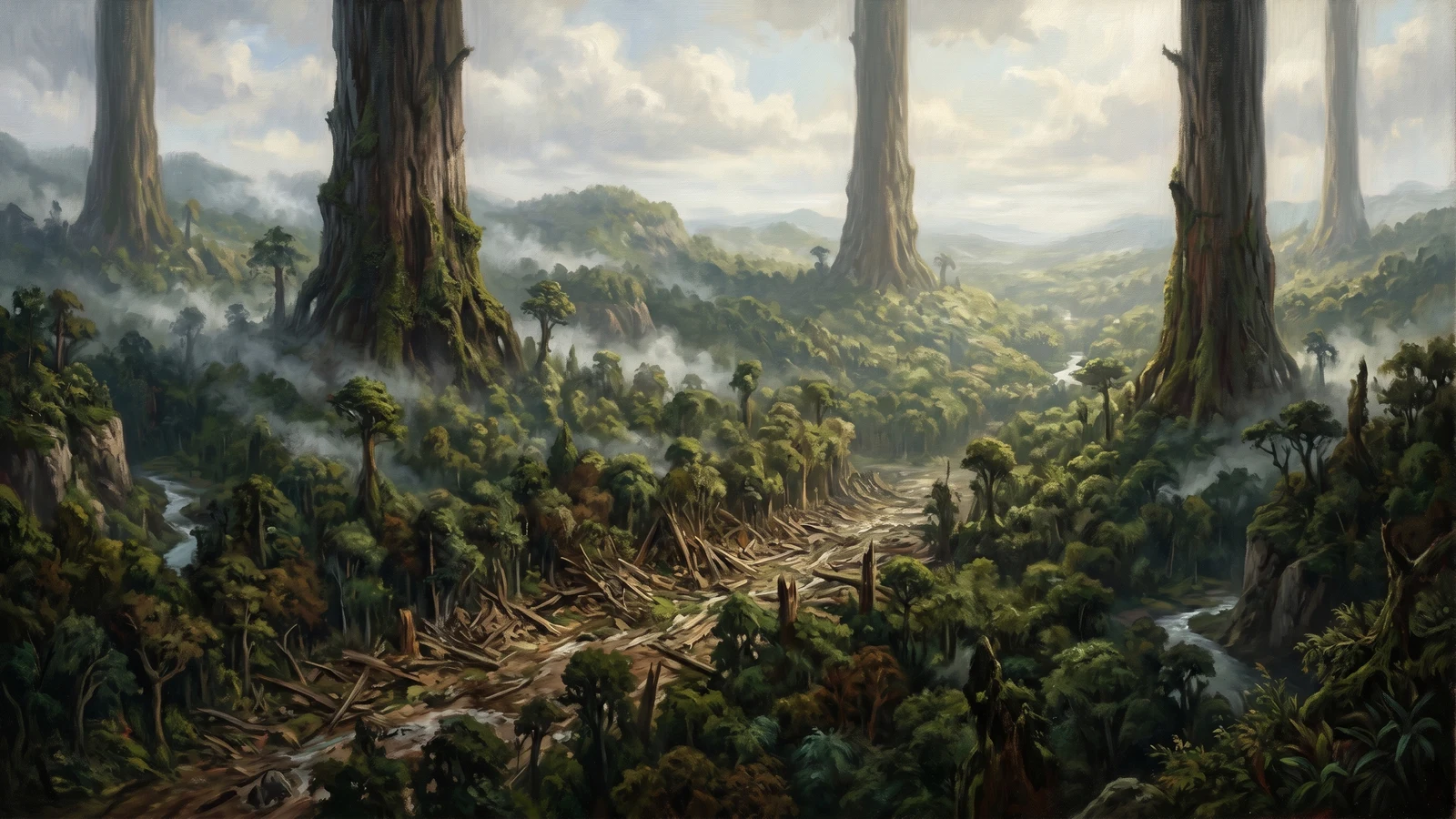
The worst things tend to come from the same handful of places, and a working knowledge of where is most of a traveler's survival. The far south is cold and getting colder, and what the cold animates does not negotiate. The deep underground holds the dark-touched and the things that fell out of Malstaris below the world. And the oldest wilds, the Elder Wilds in particular, are dangerous because the dead titans are buried there. The Anchor Trees that mark those graves rise three hundred feet above the canopy and share a slow, distributed awareness that remembers an age before emotion existed. The forty-foot apes that rule the Apelands may be tied to those graves; no expedition has lasted long enough to learn how. Sleep beneath an Anchor Tree and you dream in a language older than language. The trees mean you no harm. That is not the same as being safe near them.
The Apelands begin at the far shore of Farthing Inlet, where the canopy is too tall to see the tops of. The Gamori hunt the whole of the surrounding forest and will not cross the water. Ask why and they point at the smashed treeline a mile inland, a road of broken trunks two hundred yards wide, churned flat by something settling a territorial dispute. Then they point back the way you came.
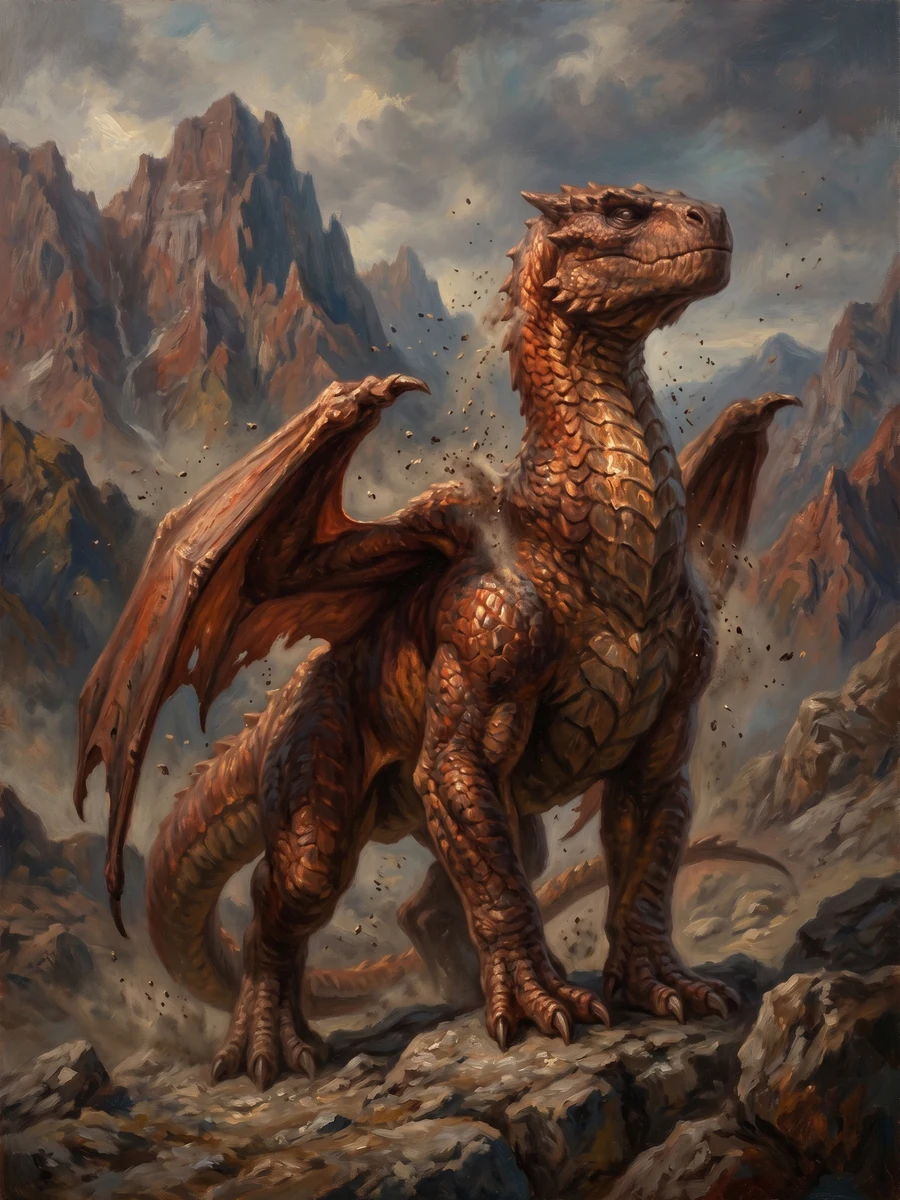
Then there are the dragons, which do not belong anywhere on the gradient because they predate it. They have hunted Alaria since the Reign of Dragons began ten million years ago, the children of the dragon-father Nagatayora, and for a long age they ruled all six planes outright. They no longer do; the elves and the younger peoples broke that dominance, and a dragon today is a power in its region rather than over the world. But they do not die of natural causes. They age into thousands of years, sometimes into millions, and a creature with that much time runs out of ordinary reasons to act. Some turn to patient cruelty for want of anything else to fill the centuries. Others narrow to a single obsession and never let go. Kanzekill has hunted one hidden fortress through the Dragon's Spine for four hundred years because it holds her true name, and a true name in the wrong hands can command its owner like a puppet. Findra blinded in deep water and spent decades rebuilding her sight out of leyline-charged glass that feels motion instead of seeing it. These are not beasts that grew large. They are deliberate, and they were here long before the things a traveler usually fears.
One fact sits under every entry in this bestiary. Species in Alaria are defined in Deoric, the command tongue of the titans, and a thing's true name is its definition. A wolf is a wolf because its name says so, which is why a wolf does not slowly drift into something else across the generations the way creatures do in worlds without such a language. So the monstrous is rarely an animal that simply went wrong on its own. It was named wrong, or built, or held open against its proper death, or it is something too old and too strong to answer to anyone's name but its own.